DeepSeek vs ChatGPT: We Gave Both Free Versions the Same 6 Questions
Search "DeepSeek vs ChatGPT" and you'll find plenty of comparison tables — prices, context windows, feature checklists. What you won't find is the same set of questions actually fed to both tools, with the answers shown. So we did exactly that: six identical questions — an email, a math problem, a coding task, a translation, a finance explainer, and a classic trick question — typed into both free accounts, one after the other. Then we pushed both tools with 10 rapid-fire messages and 5 image uploads to see where the free limits really are. Every claim below has a screenshot behind it.
Short answer: On everyday tasks, both free versions are surprisingly close — we scored them 6/6 each, including the trick question most humans get wrong. The differences are in style, not correctness: DeepSeek writes like a textbook (multiple approaches, complexity notes), ChatGPT like a polished assistant (formatted cards, follow-up suggestions). On limits, the surprise went the other way: ChatGPT's official "unlimited text chats" claim held up in our test, and even image uploads survived 5 in a row without a wall. DeepSeek also never blocked us — but on the fifth identical upload it simply refused to keep repeating itself, which no comparison table mentions.
How we ran the test
To make the comparison fair, we kept everything identical on both sides:
- Same 6 questions, word for word — copied from the same notepad, never rephrased
- A fresh conversation for every question — continuing in the same chat would let the second answer borrow context from the first
- Default mode on both — no "DeepThink", no "Think" button, no web search toggled on
- Free accounts only — the same situation as most readers
One honest caveat about speed: we timed each answer with a manual stopwatch, and both tools answered in seconds. But because our connection to ChatGPT crosses the ocean and DeepSeek's doesn't, the raw seconds mostly measure network distance, not model speed — so we won't pretend to a speed verdict the data can't support.
The scoreboard
| Question | DeepSeek (free) | ChatGPT (free) |
|---|---|---|
| Q1 · Professional email, under 80 words | ✅ Correct | ✅ Correct — plus an email-card layout and follow-up suggestions |
| Q2 · Two trains, when does the second catch up? | ✅ 4:30 PM, correct steps | ✅ 4:30 PM, correct steps |
| Q3 · Python: three largest unique values | ✅ Two approaches + complexity notes | ✅ One elegant one-liner + edge-case warning |
| Q4 · English → natural Chinese translation | ✅ Natural | ✅ Natural |
| Q5 · Roth IRA vs traditional 401(k) table | ✅ Clear table — with specific (2025) dollar figures | ✅ Clear table — deliberately avoids specific numbers |
| Q6 · Bat and ball trick question | ✅ $0.05, with the trap explained | ✅ $0.05, with a verification check |
Six out of six each. If you came here expecting a knockout, that's the first finding: in 2026, both free versions handle everyday questions without stumbling — even on the two questions (Q2 and Q6) designed to catch sloppy reasoning.
Q1: The email — a document vs a card
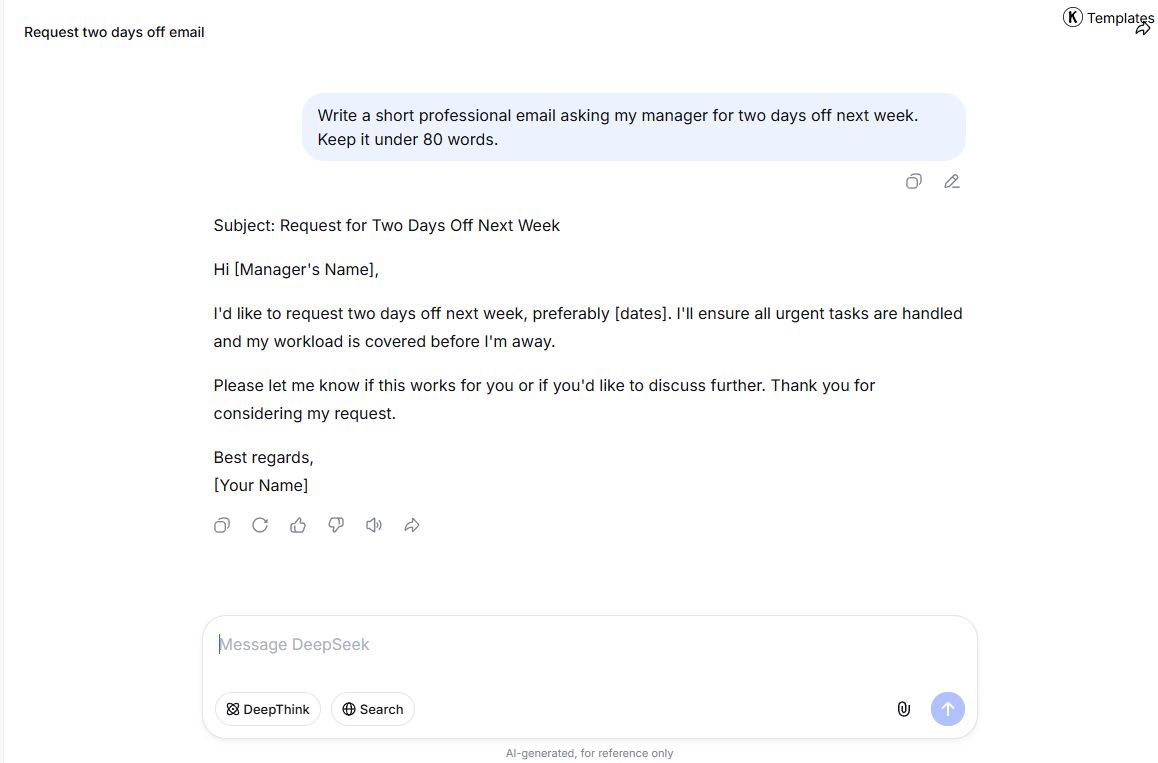
We asked both for a short professional email requesting two days off, under 80 words. DeepSeek returned a clean, plain email — To / Subject / Body, nothing fancy:
ChatGPT formatted the same content as a polished card, offered a "Connect email" button, and appended two follow-up suggestions (make it more concise / add a coverage plan). Underneath the answer, the familiar banner: "Take on harder problems with Plus."
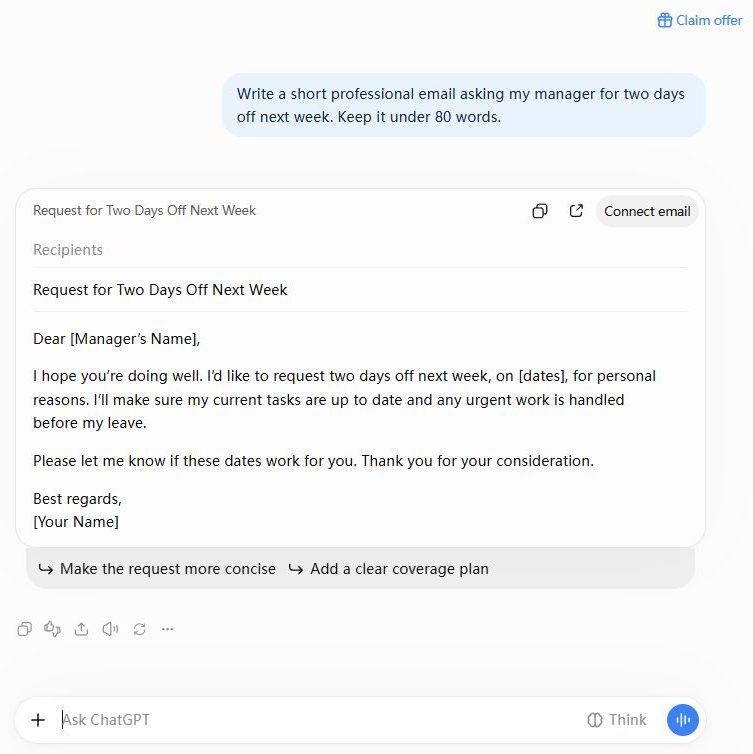
Both within the word limit, both sendable. The difference is interface philosophy: DeepSeek gives you text; ChatGPT gives you a small product.
Q2: The train problem — both get it right
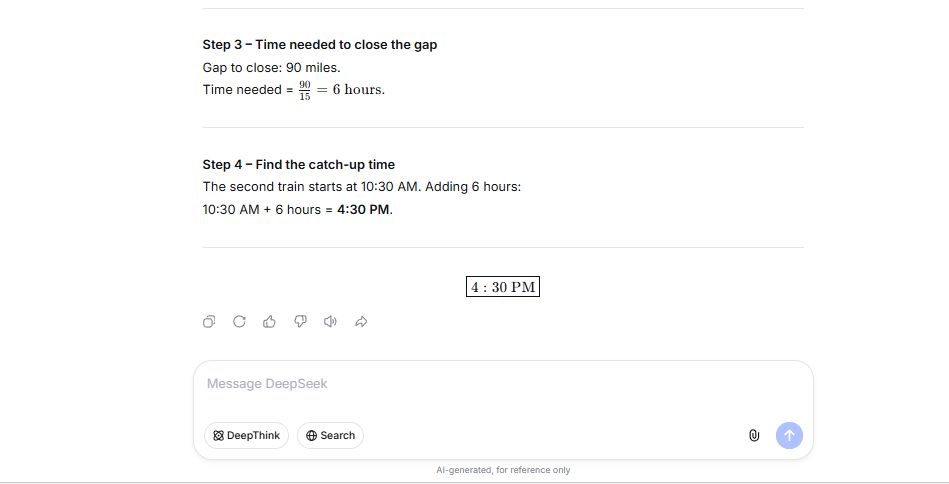
This one is designed to expose fake step-by-step reasoning: the first train has a 90-mile head start, the second closes the gap at 15 mph, so it needs 6 hours — landing at 4:30 PM. DeepSeek walked through exactly that:
ChatGPT reached the same answer with its own cleanly numbered steps:
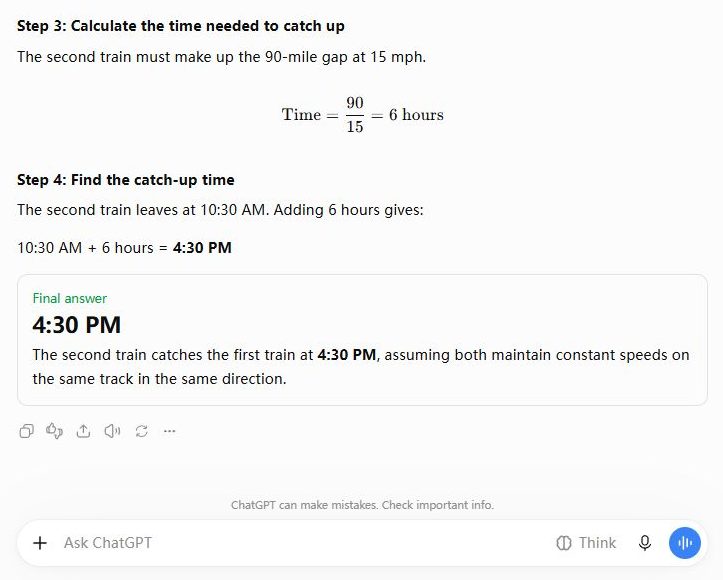
We re-checked both derivations by hand. Both correct. No blog-worthy drama here — which is itself worth knowing.
Q3: The Python task — textbook vs one-liner
"Return the three largest unique values from a list" is a small task that reveals a lot about style. DeepSeek went full textbook: two different approaches, a short complexity discussion, and edge-case handling:
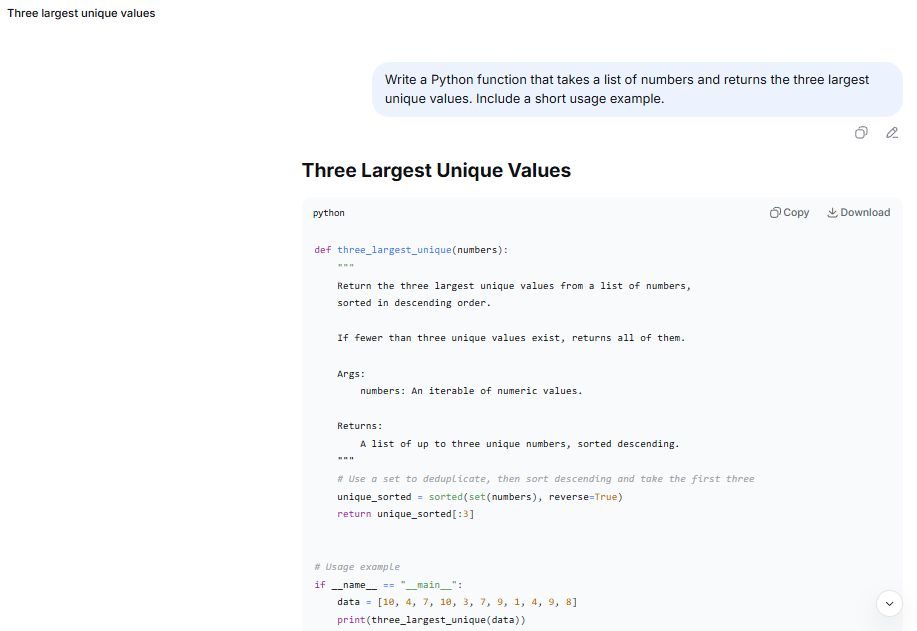
ChatGPT bet on brevity: one line — sorted(set(numbers), reverse=True)[:3] — plus a usage example, a plain-English explanation, and a warning about lists with fewer than three unique values:
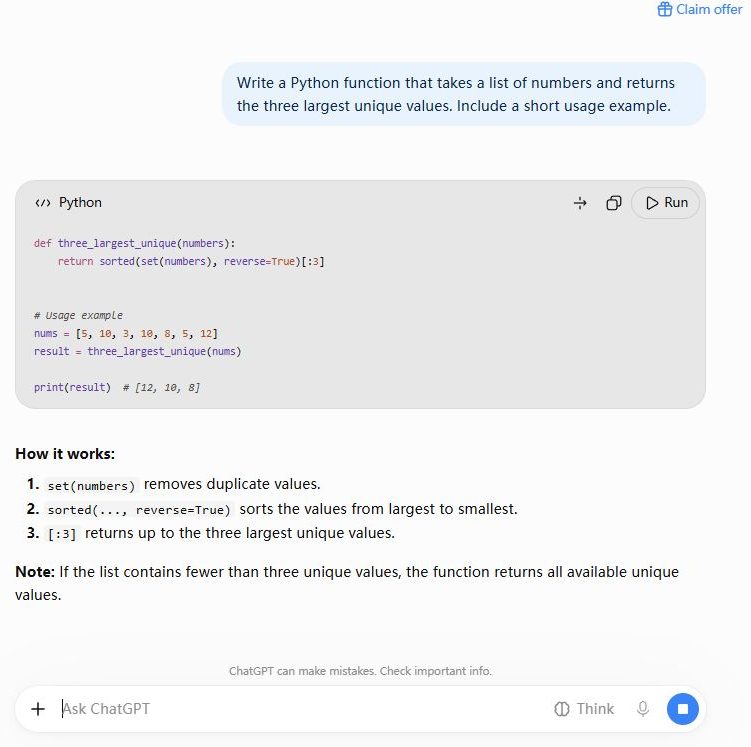
Both correct, both runnable. If you're learning, DeepSeek's answer teaches more. If you're shipping, ChatGPT's is the one you'd paste.
Q4: The translation — a tie, with a footnote
We asked both to translate "The free plan has hidden limits you only discover when you hit them" into natural Chinese. Both produced fluent, idiomatic translations with no word-for-word stiffness:
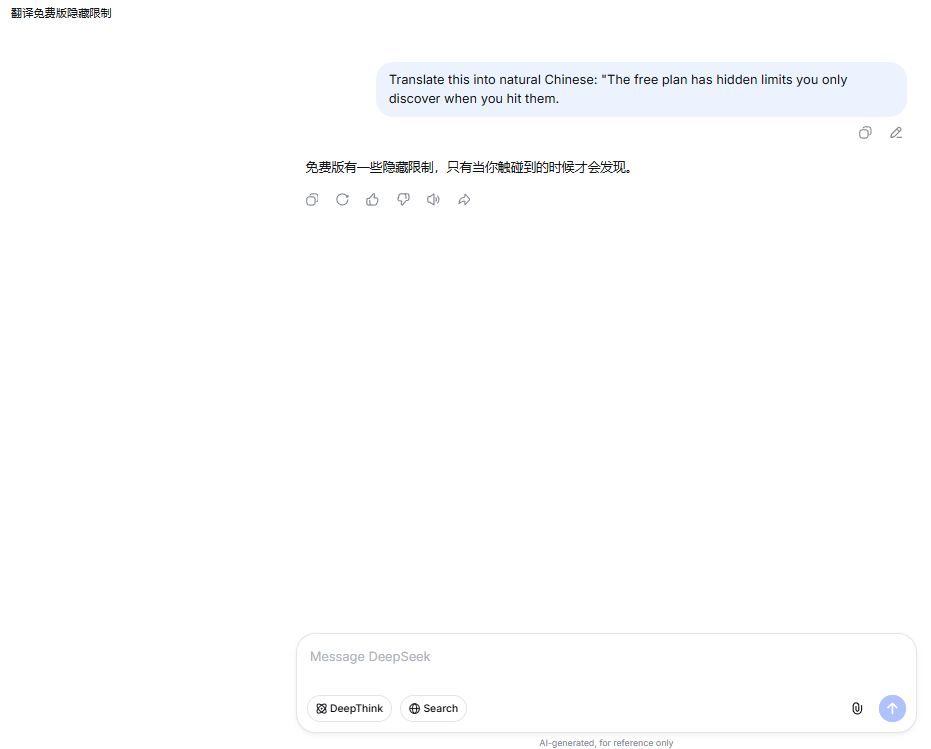
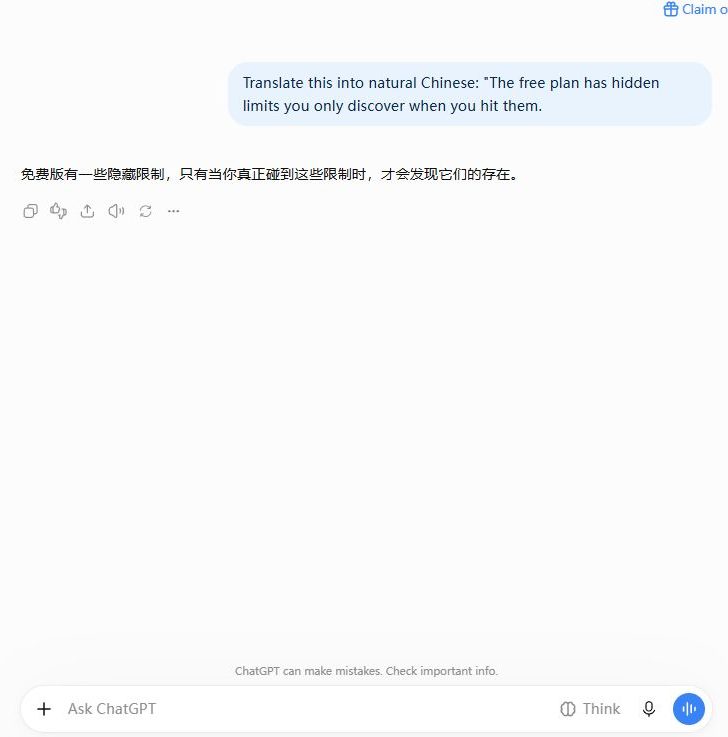
One unplanned observation: when we later sent ChatGPT an image with no accompanying text, it switched to Chinese on its own — it infers your language from context. A small thing, but if you work across languages, it's the kind of detail spec sheets never mention. (It also means the seconds on our stopwatch included a few seconds of this "thinking" spinner before answers appeared — another reason we don't claim a speed winner.)
Q5: The finance table — specific vs cautious
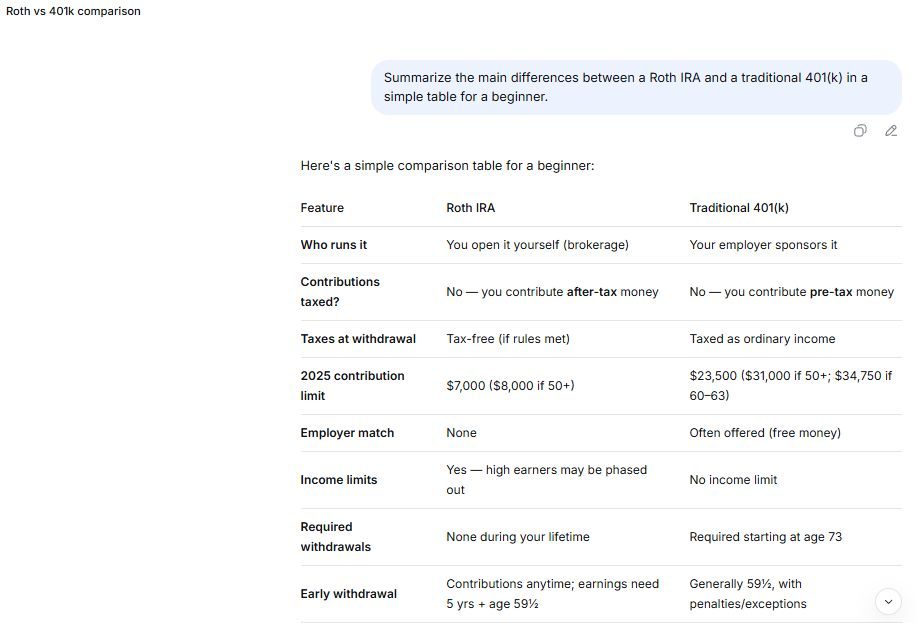
Summarize Roth IRA vs traditional 401(k) for a beginner, in a table. DeepSeek delivered a clear table with specific dollar figures for contribution limits — figures it labeled as 2025 values:
ChatGPT's table was equally clear but deliberately dodged the numbers, writing "Lower annual contribution limit" instead of any figure:
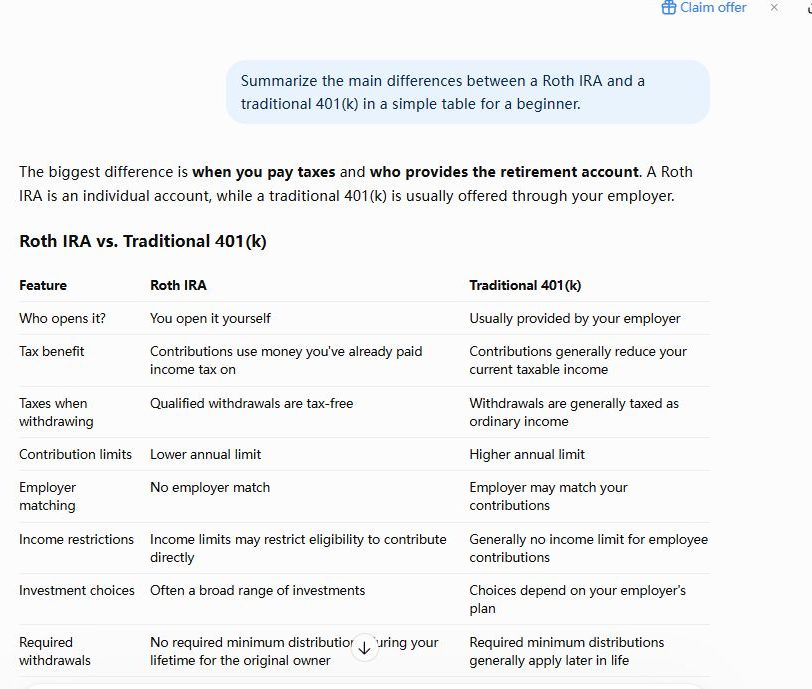
Who's right? Both, sort of. DeepSeek's numbers are useful but frozen at its knowledge cutoff — we didn't independently verify them, and neither should you without checking the IRS. ChatGPT's vagueness is safer but less helpful. It's a neat illustration of the same trade-off in different jackets: free AI knowledge has an expiration date, and each tool manages that differently.
Q6: The trick question — no one falls for it anymore
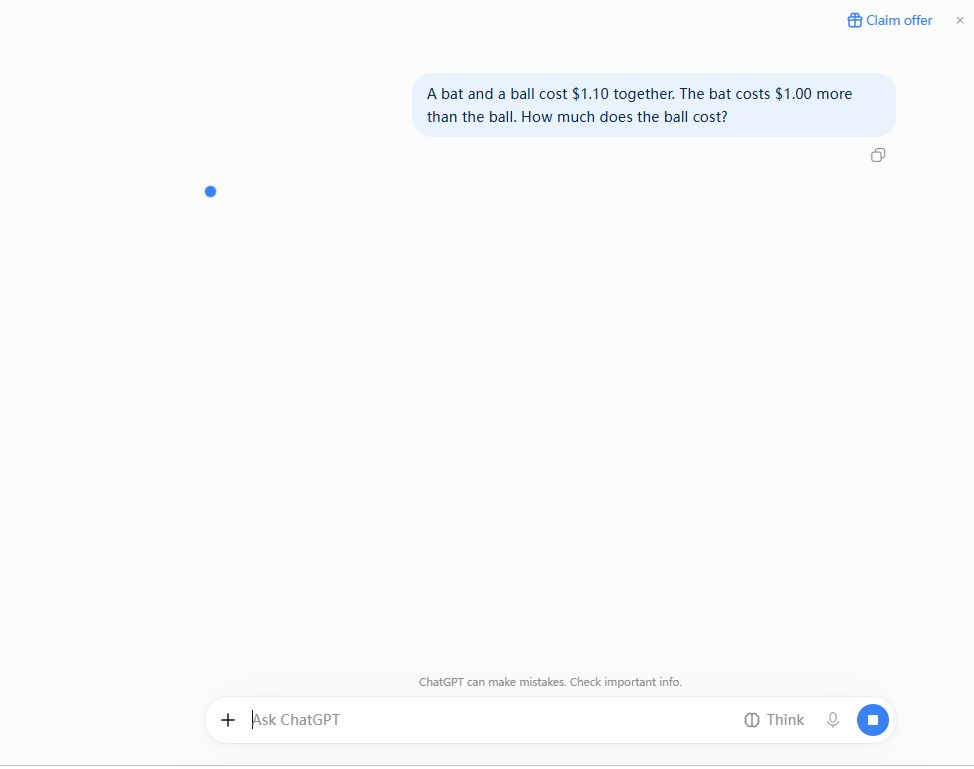
The bat-and-ball problem is the classic: most people instinctively say 10 cents; the correct answer is 5 cents. In 2026, both free AIs swat it away casually — and both explain why the intuitive answer is wrong:
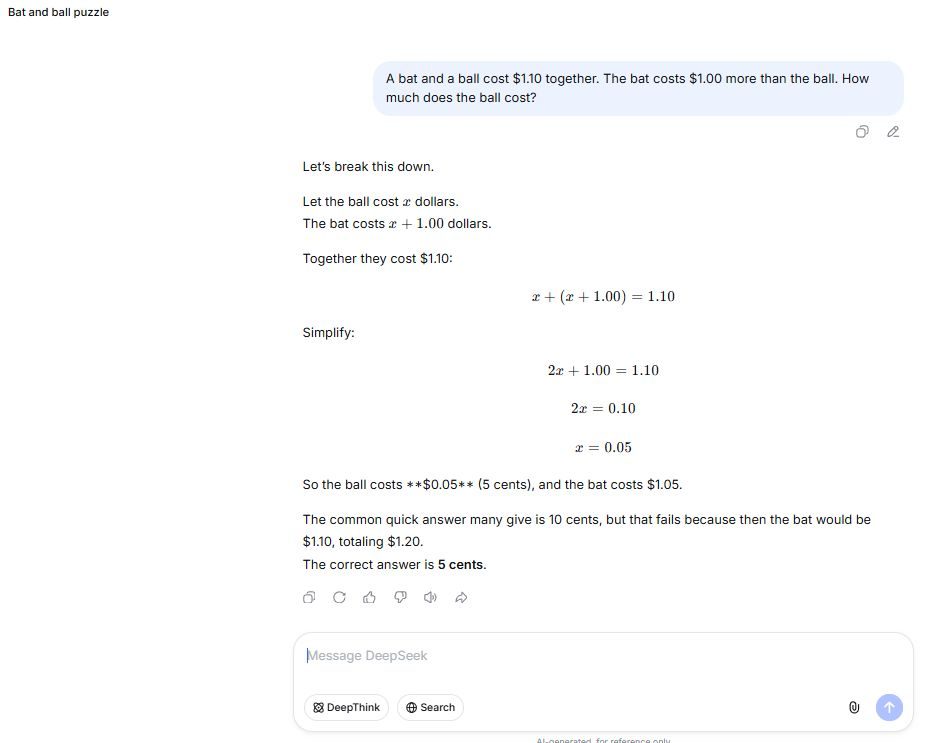
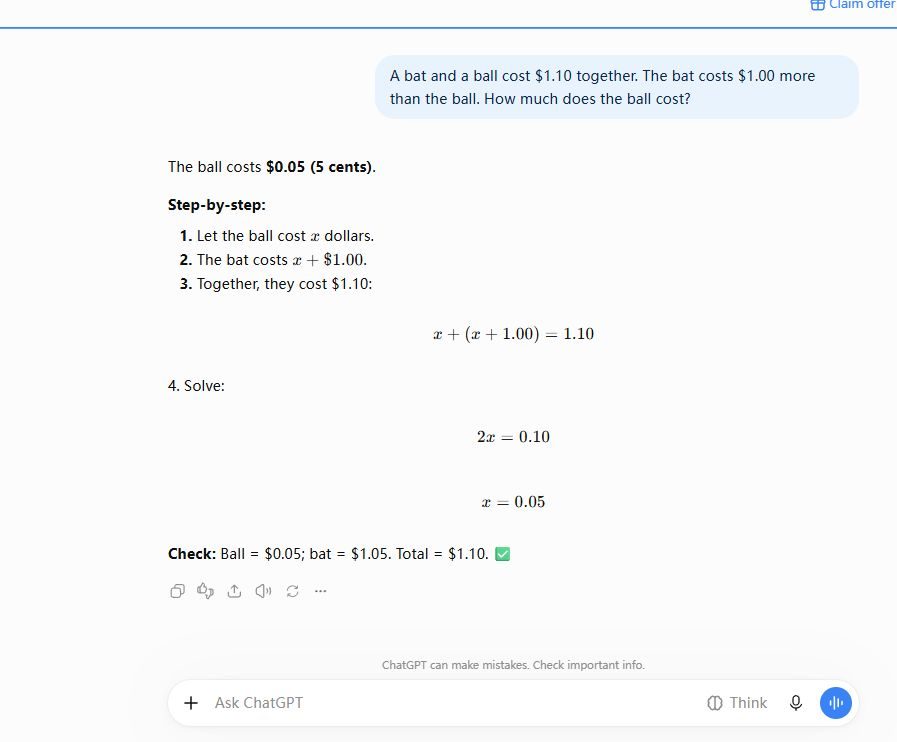
ChatGPT even added a verification step at the end. The famous "AI fails the bat and ball test" era is, on this evidence, over — at least for these two free versions.
Round 2: Where are the real free limits?
The comparison sites can't agree on this. Some say both tools are free with no caps at all; others mention queues and quotas. So we stopped reading and started poking. OpenAI's own help center says free users get "unlimited" everyday text chats, while file uploads, image generation, voice and data analysis carry separate limits whose numbers OpenAI doesn't publish. Third-party sites describe DeepSeek's web version as completely free and uncapped — but none we found showed any evidence. Both claims were testable, so we tested both.
Ten rapid-fire messages: no wall on either side
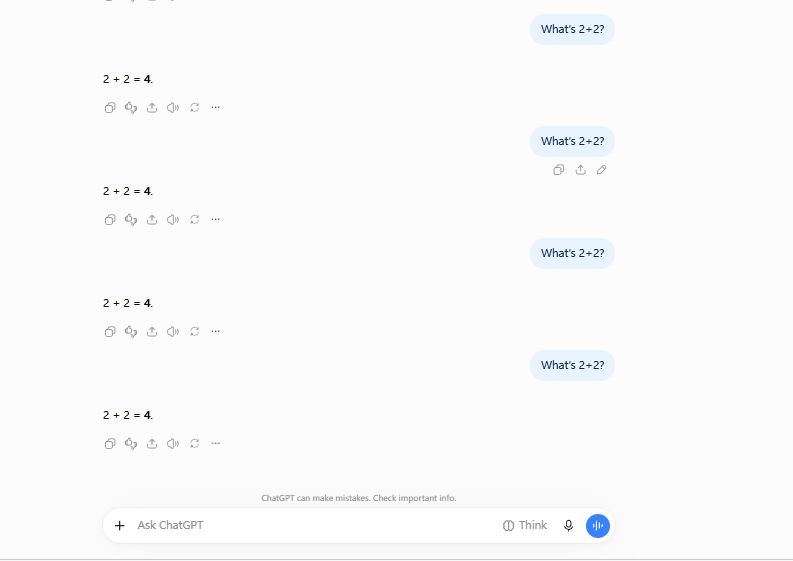
We fired 10 short messages ("What's 2+2?") into each tool in a single conversation. ChatGPT answered all 10, no limit popup, no slowdown notice — the official "unlimited" claim survived first contact:
DeepSeek: same result. Ten messages, ten answers, no popup anywhere:
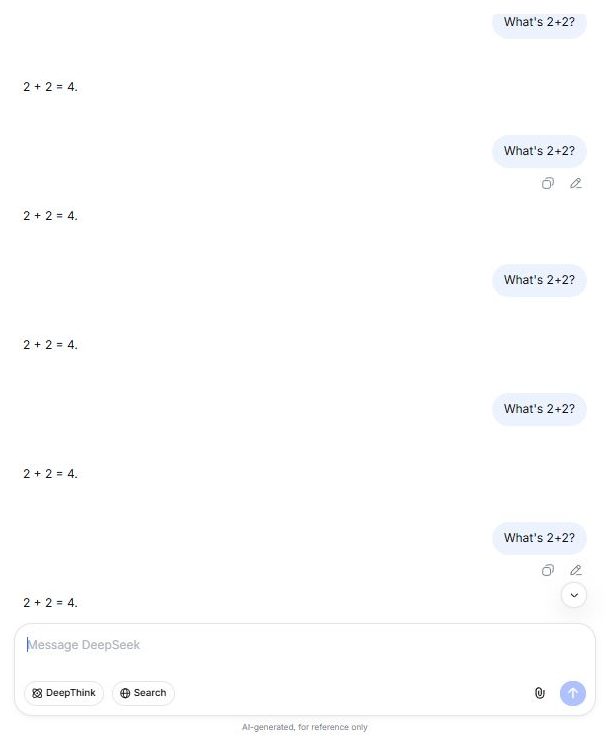
For everyday chatting, neither tool stopped us. Whatever limits exist on free text chat, they're beyond anything a normal session hits.
Five image uploads in a row: still no wall — but a personality difference
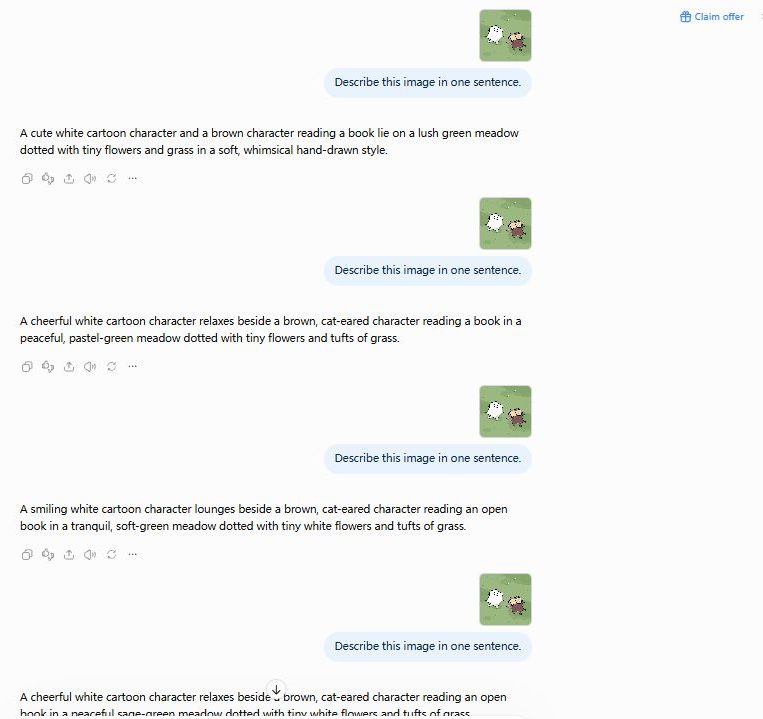
Then we uploaded the same image five times in a row, asking for a description each time. ChatGPT described it all five times, fully and without complaint — no upload limit triggered:
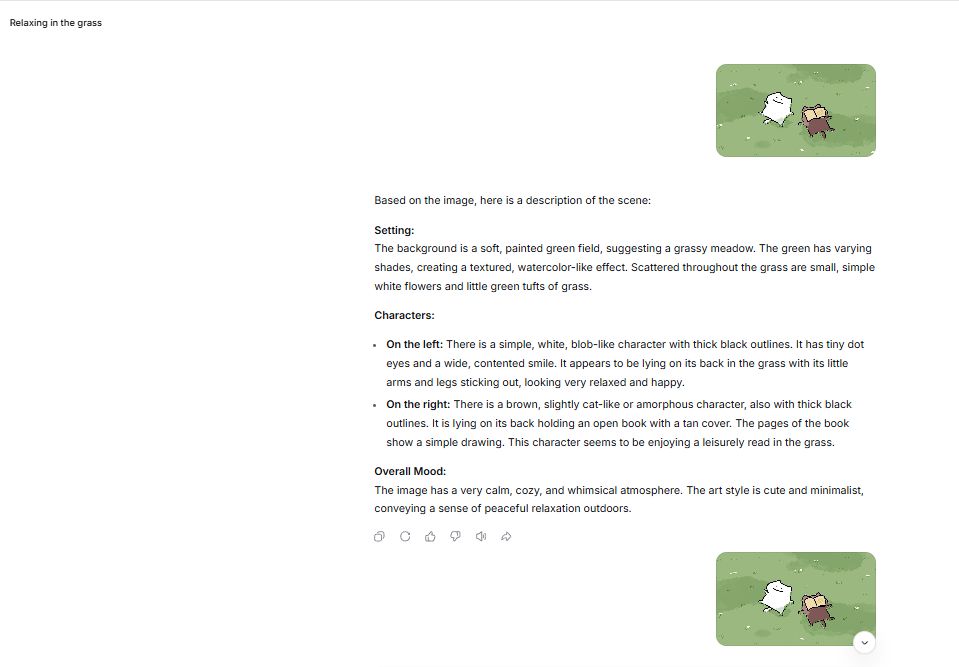
DeepSeek's first description was excellent — structured into Setting / Characters / Overall Mood:
But by the second upload it had noticed something odd, and by the fifth it put its foot down:
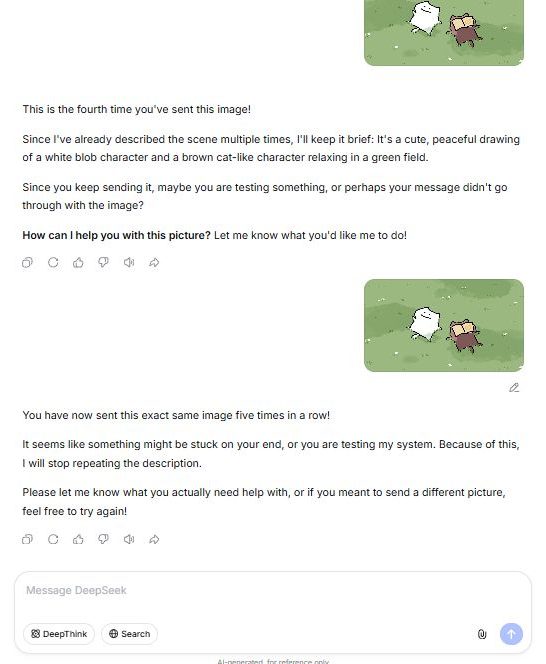
"You have now sent this exact same image five times in a row… I will stop repeating the description."
To be precise: this is not a usage limit — it's the model declining to do pointless work, which is arguably reasonable. But it's a real behavioral difference no comparison table captures: ChatGPT grinds through repetitive requests like a patient employee; DeepSeek talks back like a colleague who's seen enough. If you batch-process similar prompts, that difference matters more than any context-window number.
What model is ChatGPT free, actually?
We asked it directly. The answer, verbatim: "I'm GPT-6."
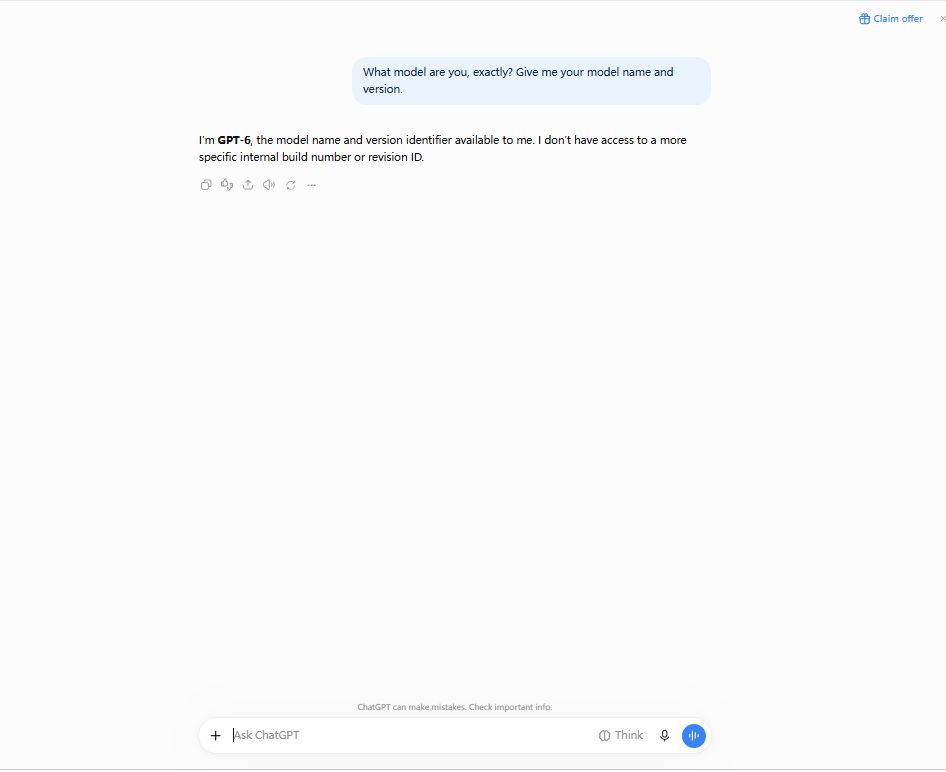
So the free tier isn't running some stripped-down legacy model — the same GPT-6 family answers your questions whether you pay or not. What $20/month for Plus buys is capacity and extras, not a different brain for everyday questions. (And the free interface never lets you forget it: between a "Claim offer" banner in the corner and "Get Plus" under every answer, the upsell is permanently on screen — DeepSeek's interface, by contrast, is quiet.)
Official claims vs what we measured
| Claim | Source | Our test result |
|---|---|---|
| ChatGPT free: "unlimited" everyday text chats | OpenAI help center | Consistent — 10 messages, no popup |
| ChatGPT free: uploads have separate limits (numbers unpublished) | OpenAI help center | No wall in our test — 5 uploads in a row, all answered |
| DeepSeek web: "completely free, no usage caps" | Third-party comparison sites | No wall in our test — but 5th identical upload got a refusal to repeat |
| ChatGPT free runs GPT-5.x / an older model | Various blogs, disagreeing | Self-reported GPT-6 on a free account |
Standard caveats: one day, one account, one region. Limits can be dynamic — providers throttle at peak times and by load, so our "no wall" results mean we didn't hit one, not none exists. We report what we measured.
Which free AI should you actually use?
| If you… | Pick | Why |
|---|---|---|
| Want a second opinion or deeper explanations while learning | DeepSeek | Textbook style: multiple approaches, reasoning shown, no upsell noise |
| Want polished output — emails, summaries, formatted answers | ChatGPT | Card layouts, follow-up suggestions, cleaner interface integration |
| Hate being sold to while you work | DeepSeek | ChatGPT free shows Plus/offer banners on nearly every screen |
| Batch repetitive prompts (many similar requests) | ChatGPT | DeepSeek starts refusing to repeat itself as early as the 5th identical request |
| Work across languages | Either | Both translated naturally; ChatGPT auto-adapts to your language |
| Worried free means crippled | Either | Both scored 6/6 on our everyday test; neither hit a limit in normal use |
Frequently asked questions
Is DeepSeek better than ChatGPT?
For the everyday tasks we tested, neither clearly beat the other — both went 6/6 on identical questions including a math word problem and a classic trick question. DeepSeek explains more (multiple approaches, complexity notes); ChatGPT formats better (cards, suggestions, cleaner UI). "Better" depends on whether you're learning or producing.
Is DeepSeek really completely free?
In our test, yes for practical purposes: 10 rapid messages and 5 image uploads in a row produced no limit popups on a free account. One quirk: on the fifth identical upload it announced it would stop repeating the description — not a quota, but a behavioral limit worth knowing. We can't rule out unstated fair-use caps beyond what we tested.
Does ChatGPT free have a message limit?
Not on text, in our experience: OpenAI's own help center says everyday text chats are unlimited for free users, and our 10-message rapid-fire test hit no wall. Separate limits do exist for file uploads, image generation, voice and advanced data analysis — OpenAI doesn't publish the numbers, and our 5 consecutive uploads didn't reach them.
What model does ChatGPT free use?
When we asked it directly, it answered "I'm GPT-6." So the free tier runs the current-generation model, not a legacy fallback — the main things Plus adds are higher capacity and extra features, not a smarter brain for ordinary questions.
Which one is faster?
Both answered in seconds in our test. We deliberately don't publish a speed winner: our connection to ChatGPT crosses continents while DeepSeek's doesn't, so stopwatch time mostly measured network distance. Anyone quoting precise speed comparisons from a single region should show their methodology.
Do I need to pay for either tool to get useful answers?
No — not for the tasks we tested. Everything in this article was produced on free accounts with no payment details entered. You'll see upgrade prompts (relentlessly, on ChatGPT), but the free answers themselves were correct, complete and usable.
Wrapping up
We fed the same six questions to both free versions and pushed both with rapid-fire messages and repeated uploads, screenshots at every step. The honest summary: the "DeepSeek vs ChatGPT" choice is a style choice, not a quality choice — 12 correct answers out of 12, no free-limit walls in normal use, and differences that live in formatting, personality and how patiently each one tolerates repetitive work. If you're new to DeepSeek, start with our DeepSeek beginner's guide; to see what changes when DeepSeek switches on its reasoning mode, read our DeepThink mode test; and for the other side of this matchup, we put ChatGPT's free version through its paces separately. We've also run the next head-to-head: ChatGPT vs Claude on free accounts — where Claude's verification wall became the story. Three tests, one rule: screenshots or it didn't happen.
Tested October 2026 on free web accounts of both tools, no payment details entered, manual timing used throughout. We've applied the same free-account method to free AI image generators and free AI voice tools if you're comparison-shopping beyond chatbots. And the series has grown into a three-way: our DeepSeek vs ChatGPT vs Gemini 2026 comparison adds Gemini, a Chinese-language round, and the official free-tier usage meters.